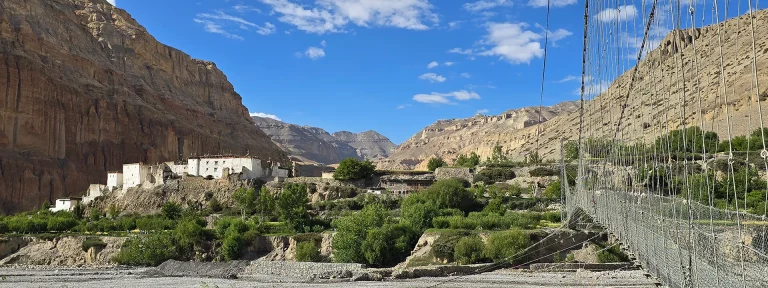
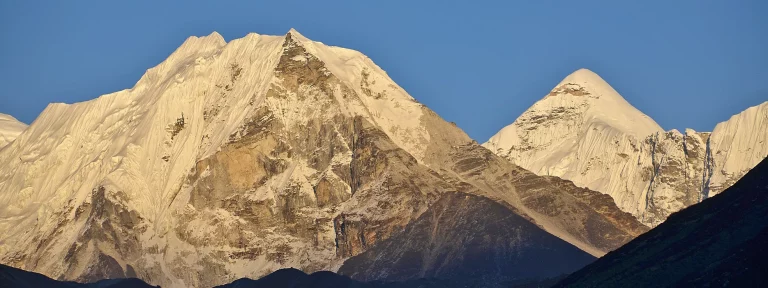
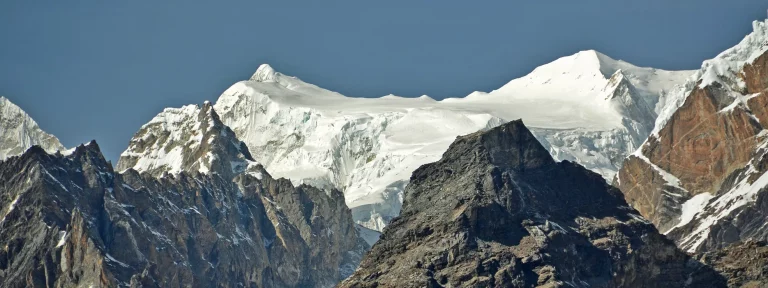
The Everest Base Camp Trek is a legendary high-altitude trek that starts in Lukla and takes 10–14 days to traverse Sagarmatha National Park to the foot of the world’s highest mountain. Along the way, you’ll pass through a fascinating high-mountain landscape and visit the lively “Sherpa capital” of Namche Bazaar, which is built into the mountainside in a series of terraces. There you’ll find cafés, markets, and gear shops.
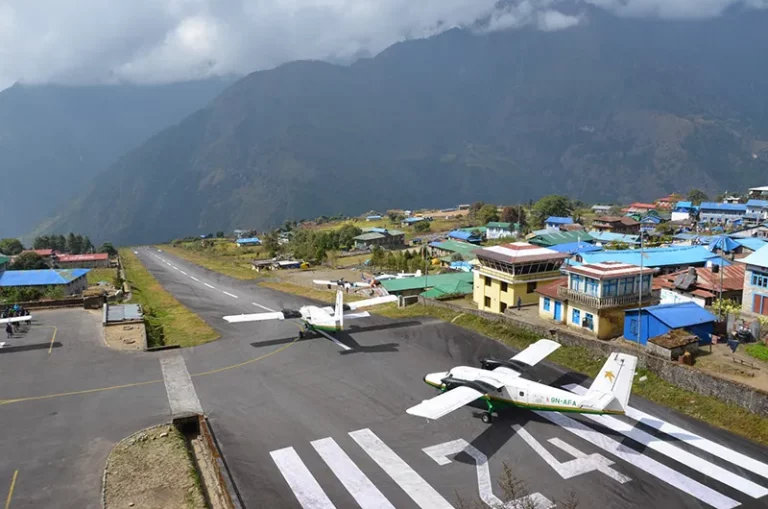
The journey to Lukla is usually by plane from Kathmandu. The Hillary-Tenzing Airport in Lukla is considered one of the most spectacular airports in the world, with an extremely short runway on a mountainside.
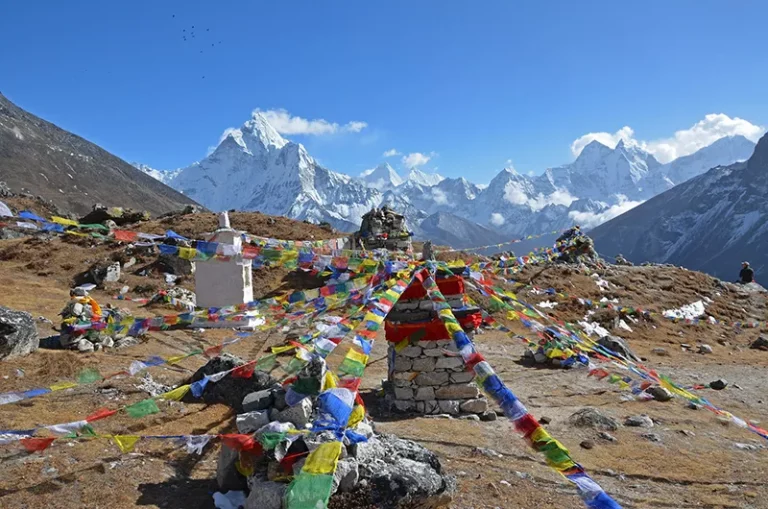
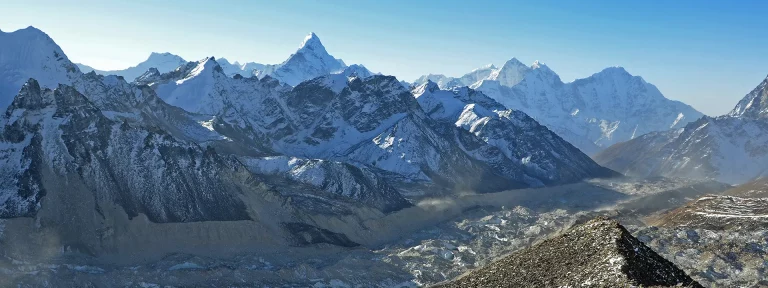
The route offers spectacular views of iconic peaks like Ama Dablam and leads along the massive Khumbu Glacier up to an altitude of 5,364 meters. A particular challenge is the thin air, which is why acclimatization days in places like Namche Bazaar and Dingboche are important. Those who make it to the Kala Patthar viewpoint at 5,580 meters are rewarded with an unparalleled panoramic view of Mount Everest.
Everest Base Camp - Day 1
Start: Lukla (4,336 m) Destination: Phakding (2,635 m) Elevation gain: 220 m Distance: 8.5 km, Duration: 4–5 hours
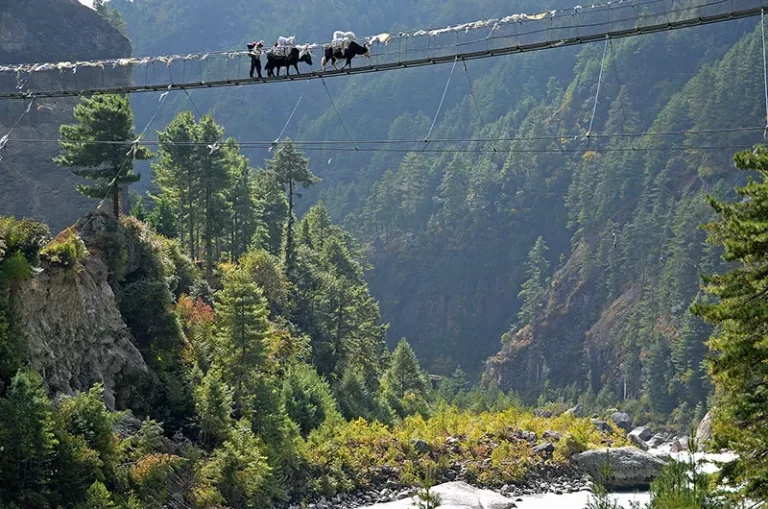
Lukla is the starting point for most trekkers and aspiring climbers in the Khumbu region. Here, the yaks are loaded, porters are organized, final purchases are made, and the trek can begin. On the first day of the trek to Everest Base Camp, the route leads to Phakding. The village is located at a lower altitude than Lukla, allowing you to slowly acclimate to the unfamiliar altitude. The trail winds through rhododendron and magnolia forests, passing many small villages and lodges.
Everest Base Camp - Day 2
Start: Phakding (2,635 m) Destination: Namche Bazar (3,440 m) Elevation gain: 840 m Distance: 10 km, Duration: 5 hours
The trail from Phakding to Namche Bazaar is the first real test of your stamina. After 2 to 3 hours, you reach the entrance to the national park, for which you need a permit that you obtained in Kathmandu. As you follow the valley, more and more ice giants come into view, such as Thamserku (6,623 m), and after an hour you reach the Hillary Bridge, the most exposed of several steel cable bridges you must cross. After that, a steep ascent begins, which you should tackle slowly until you reach the first houses of Namche Bazaar. This friendly village lies sheltered in a basin; the buildings with their colorful roofs are arranged on terraces that wind their way up the slope. The village is the perfect place for a rest day.
Everest Base Camp - Day 3
Start: Namche Bazar (3,440 m) Destination: Tengboche (3,843 m) Elevation gain: 700 m Distance: 8 km, Duration: 4–5 hours
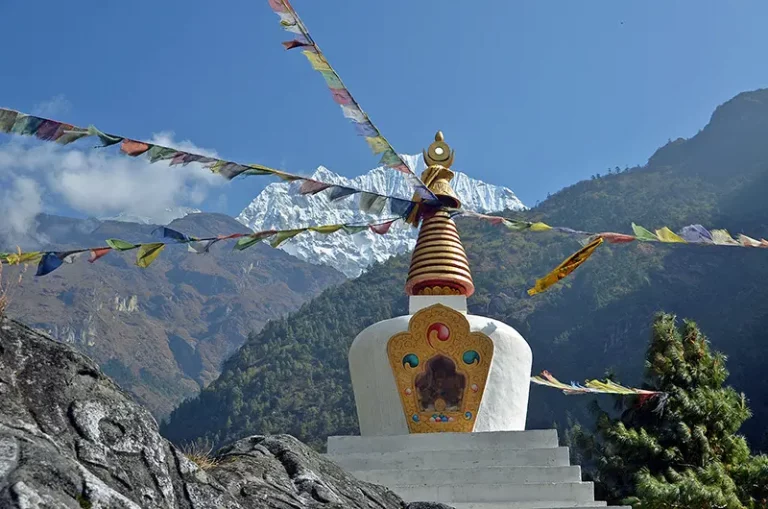
The trail follows the Khumbu Valley to Tengboche, a Buddhist monastery town and the religious center of the Khumbu region. Alternatively, you can take the slightly longer route via Khumjung, the unofficial capital of the Sherpa people. The town also has a short runway, though it is mainly used for medical emergencies. In Tengboche, you can visit the monastery and participate in the monks’ daily ceremony.
Everest Base Camp - Day 4
Start: Tengboche (3,843 m) Destination: Pheriche (4,238 m) or Dingboche (4,410 m) Elevation gain: 500 or 700 m Distance: 2 km, Duration: 4-5 hours
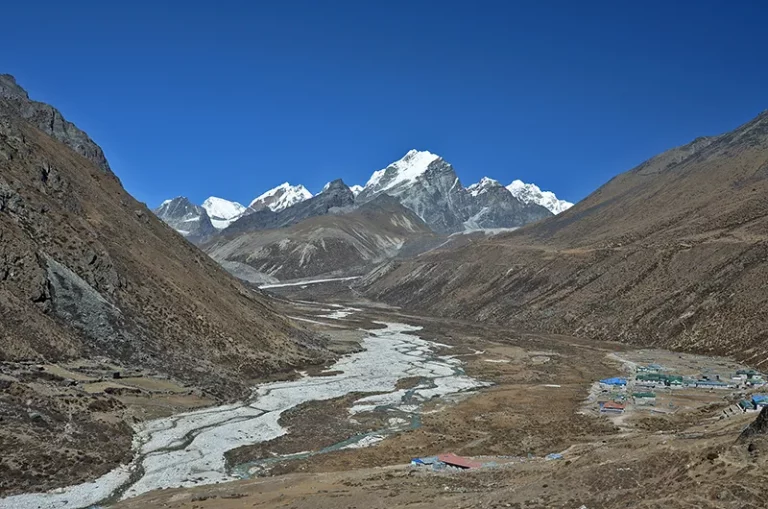
From Tengboche, the trail runs parallel to the Imja Khala River toward Pangboche. It’s worth visiting the monastery in the upper part of the village. It is the oldest monastery in the valley and is very well preserved. From Pangboche, the trail climbs steadily all the way to Pheriche. The landscape changes noticeably along the way. The vegetation becomes increasingly sparse, and temperatures drop as the elevation rises. There is a medical clinic in Pheriche. Pheriche is situated in a very scenic location by a river, surrounded by many 6,000-meter peaks. Alternatively, you can climb a few more meters in elevation and spend the night in Dingboche. From there, you can climb Nangkartshang Peak (5,083 m) the next day to acclimatize. The summit is considered one of the best vantage points in the Khumbu region.
Everest Base Camp - Day 5
Start: Pheriche (4,238 m) Destination: Lobuche (4,920 m) Elevation gain: 750 m Distance: 9.8 km, Duration: 4–5 hours
From Pheriche, the trail first climbs up to a mountain ridge. The subsequent slope is traversed while remaining at nearly the same elevation. This is followed by a steep ascent to Thukla Pass, where memorials to climbers who lost their lives are located. Several gate chortens, or “Khagan Chortens” (Khanggani = door), with bases designed as passageways, were erected for the victims of Mount Everest. After the pass, the trail continues at a more leisurely pace but with a gentle, steady climb until you finally reach Lobuche at an elevation of 4,920 meters.
Everest Base Camp - Day 6
Start: Lobuche (4,920 m) Destination: Gorak Shep (5,164 m) Elevation gain: 350 m Distance: 4.5 km, Duration: 3 hours
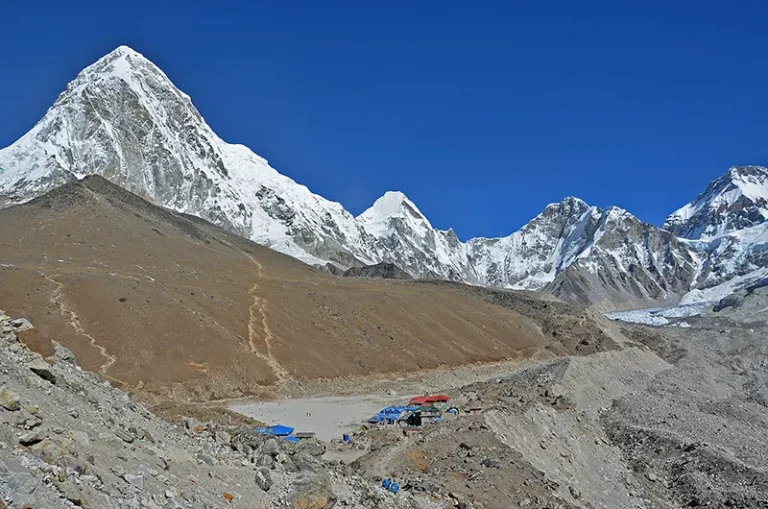
The trail from Lobuche to Gorak Shep climbs steadily but gradually. However, the thin air becomes increasingly noticeable, and your pace slows down significantly. After about 2–3 hours, you reach Gorak Shep. The trail runs along the edge of the Khumbu Glacier. At the start, the glacier is almost completely covered in scree. But the higher you climb, the more ice becomes visible. Gorak Shep is the last permanently inhabited settlement before Base Camp. The village consists of only a few simple lodges and serves as the starting point for Everest Base Camp and Kala Patthar, the famous viewpoint overlooking Mount Everest.
Everest Base Camp - Day 7
Start: Gorak Shep (5,164 m) Destination: Kala Patthar (5,545 m) Elevation gain: 380 m Distance: 1 km, Duration: 2 hours
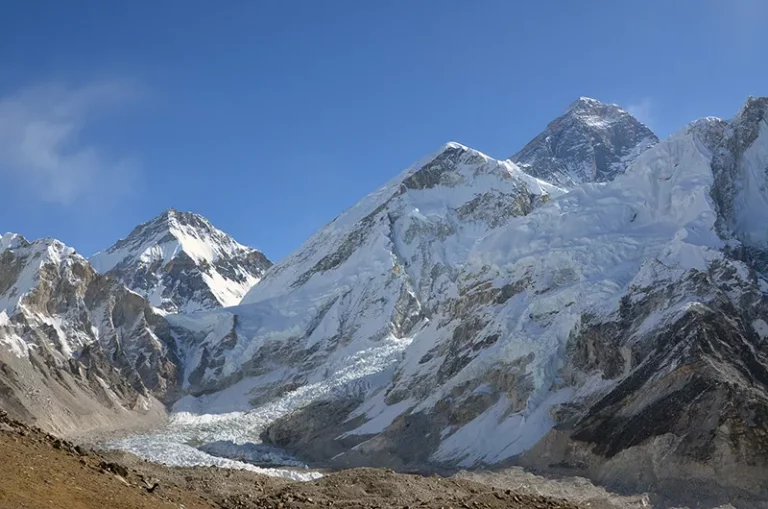
We set off around 5 a.m. to catch the sunrise at Kala Patthar, which offers the best direct view of Everest. From Kala Patthar, you look straight down into the labyrinth of ice and crevasses that climbers must traverse on their way to the summit of Everest.
Alternatively, you can continue following the valley to ascend to Everest Base Camp, which stretches over a kilometer along the Khumbu Glacier.
The return trip to Lukla is often completed more quickly in 3 to 4 days, with stops planned at places like Pheriche and Namche Bazaar.