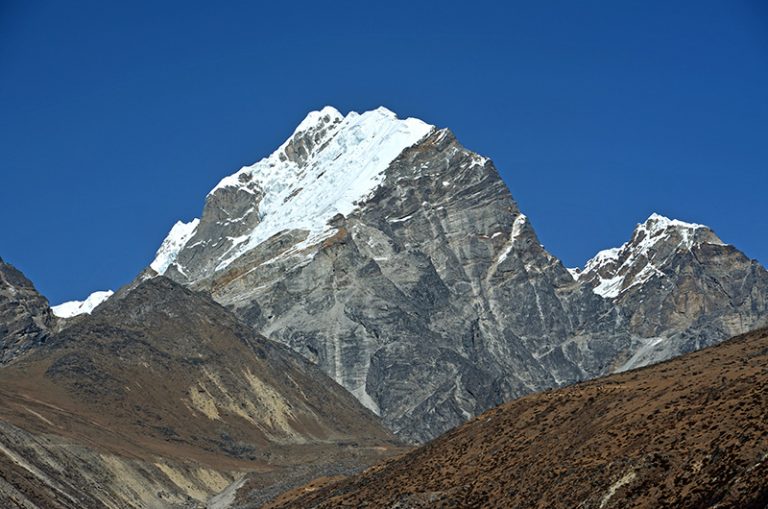
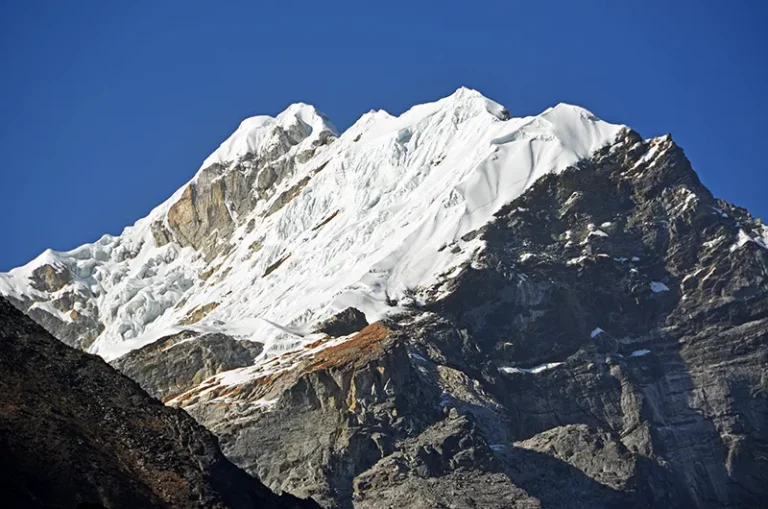
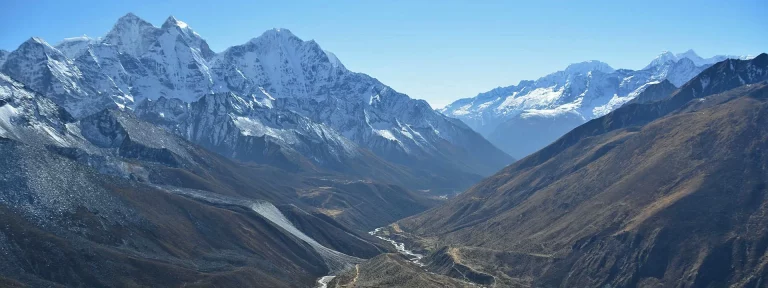
Climbing Lobuche East (6,119 m) is a significant step up from hikes to Nangkartsang or Gokyo Ri. It is considered one of Nepal’s most popular “trekking peaks,” but requires genuine mountaineering skills and equipment.
There are two summits: Lobuche West (more difficult, an expedition-level mountain) and the popular Lobuche East. The latter is often used as a training peak for Island Peak or Mount Everest, as it allows climbers to practice using fixed ropes at high altitudes.
Lobuche East is a technically moderate high-altitude trek. Experience walking with crampons, using an ice axe, and navigating fixed ropes (using the jumar technique) is required.
Lobuche Peak - Day 1
Start: Lobuche (4,920 m) Destination: High Camp (ca 5,200 m) Elevation gain: 350 m Distance: 3,4 km, Duration: 2–5 hours
From the Lobuche settlement, you’ll first hike southwest. The trail leads across rocky terrain and a distinctive rock slab (the “Lobuche Slab”).
High Camp is often located by a small, hidden lake. Here you’ll spend a short, cold night in a tent.
Lobuche Peak - Day 2
Start: High Camp (5,200 m) Destination: Lobuche East Peak (6,090 m) Elevation gain: 900 m Distance: 2 km, Duration: 6-8 hours
It is important to set out very early, around 1 or 2 a.m., to reach the summit in stable weather. The first section leads over steep rock steps and loose scree. Once you reach the snow line, you put on crampons and rope up. The steeper sections (approx. 45 to 50 degrees) on the way to the south ridge are often secured with fixed ropes. From here, a moderately steep ridge leads another 200 meters of elevation gain, past the false summit to the East Summit.
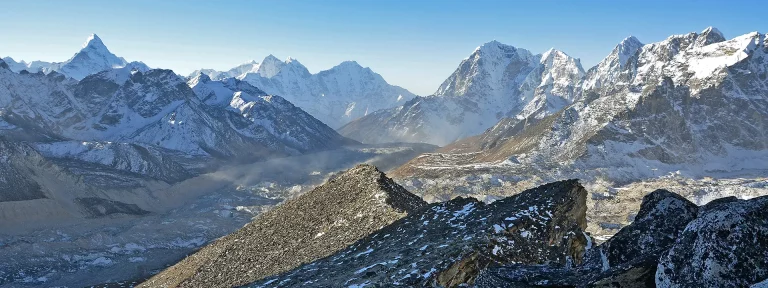
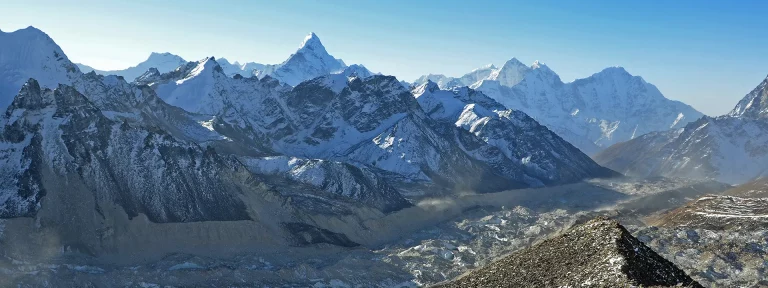
The “Trekking Summit” is a sharp section of ridge. The view from up here is breathtaking: you stand almost eye-to-eye with Mount Everest, Lhotse, Nuptse, and Ama Dablam.